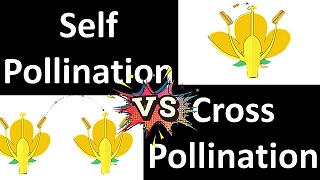
Differences between Self-pollination and Cross-pollination
S.N. Self-pollination Cross-pollination 1. Transfer of pollen grains from anther to the stigma of the same flower (typical self-pollination) or another flower of the same […]
S.N. Self-pollination Cross-pollination 1. Transfer of pollen grains from anther to the stigma of the same flower (typical self-pollination) or another flower of the same […]
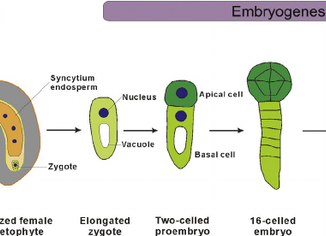
The fusion of male gamete and female gamete in sexual reproduction is called fertilization. In angiosperms, the female gamete lies deep in the ovarian cavity, […]
Generally amino acids are the end products of the digestion of dietary proteins. In humans, the degradation of ingested proteins to their constituent amino acids […]
Fossils of past life or ancestral forms of modern man revealed a lot of features of our ancestors. Man is thought to evolve from ape […]

S.N. Glycogen Starch 1. It is the main reserve food material of animal cells, hence also called animal starch. It is the main reserve food […]
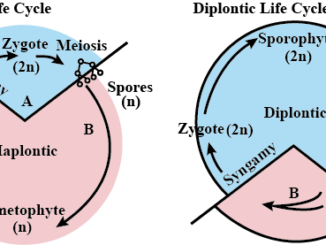
S.N. Diplontic life cycle Haplontic life cycle 1. It occurs in higher organisms, many protozoans and some lower plants. It occurs in fungi, certain […]
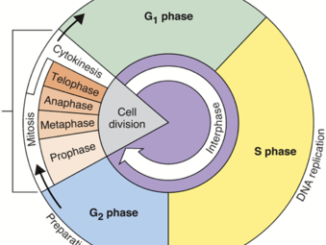
Life starts as a single cell called zygote or fertilized egg in all multicellular organisms. Living organisms grow by addition of new cells that arise […]
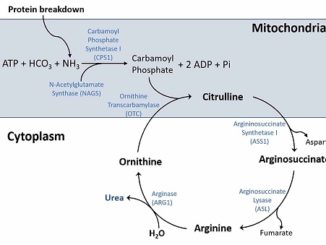
Animals require pathways for nitrogen excretion that minimizes toxicity in the body. If not reused for the synthesis of new amino acids or other nitrogenous […]
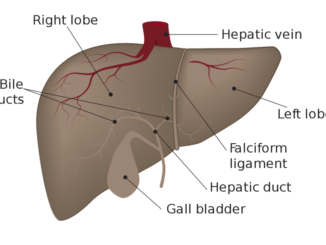
Location: The liver is the largest gland in our body that weighs between 1 to 2.3 kg in a healthy adult. It is situated in […]
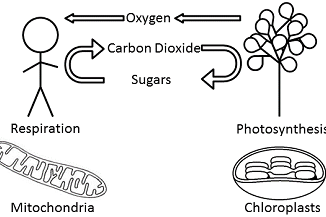
S.N. Photosynthesis Respiration 1. It is an anabolic process in which simple inorganic substances react to synthesize complex organic food. It is a catabolic process […]
Copyright © 2026 | WordPress Theme by MH Themes