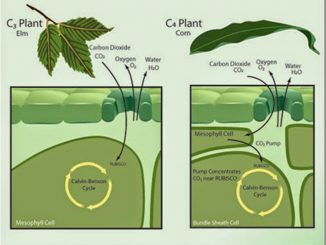
Differences between C3 and C4 cycles
S.N. Calvin cycle (C3 cycle) Hatch and Slack cycle (C4 cycle) 1. The primary acceptor of CO2 is a 5-carbon compound, Ribulose-1, 5- biphosphate. The […]
S.N. Calvin cycle (C3 cycle) Hatch and Slack cycle (C4 cycle) 1. The primary acceptor of CO2 is a 5-carbon compound, Ribulose-1, 5- biphosphate. The […]

The major physical agents or processes used for the control of microorganisms are temperature (high and low), desiccation, osmotic pressure, radiation, and filtration. Application of […]

Asexual reproduction: Paramecium reproduces asexually by transverse binary fission and is found during favorable conditions. Binary fission in Paramecium completes in the following steps: Paramecium […]

When the primary root, which is a direct prolongation of the radicle, remains distinct throughout the life of the plant and gives off lateral branches, […]
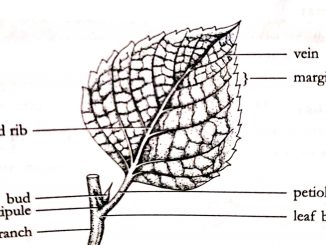
The leaf is a flattened lateral out-growth of the stem/ branch and bears a bud in its axil. It is green in color due to […]
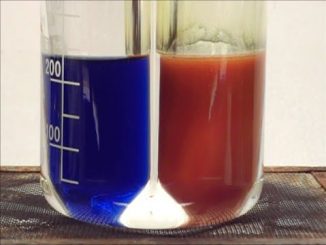
The Fehling test was developed in 1848 by Herrmann Fehling. Like Benedict’s test, it is also a sensitive test for the detection of reducing sugars. […]

Pathogens that enter into bodies of water arrive there via intestinal discharges of humans or other animals. Furthermore, certain bacterial species, particularly Esherichia coli and […]

Microorganisms affect the well-being of people in great many ways. They occur in large numbers in most natural environments and bring about many changes, some […]

Antibiotics are a special kind of chemotherapeutic agent usually obtained from living organism. The word ‘antibiotic’ has come to refer to a metabolic product of […]

Certain species of bacteria produce spores, which are metabolically dormant structure and might be present either within the cell (endospores) or external to the cell […]
Copyright © 2026 | WordPress Theme by MH Themes